
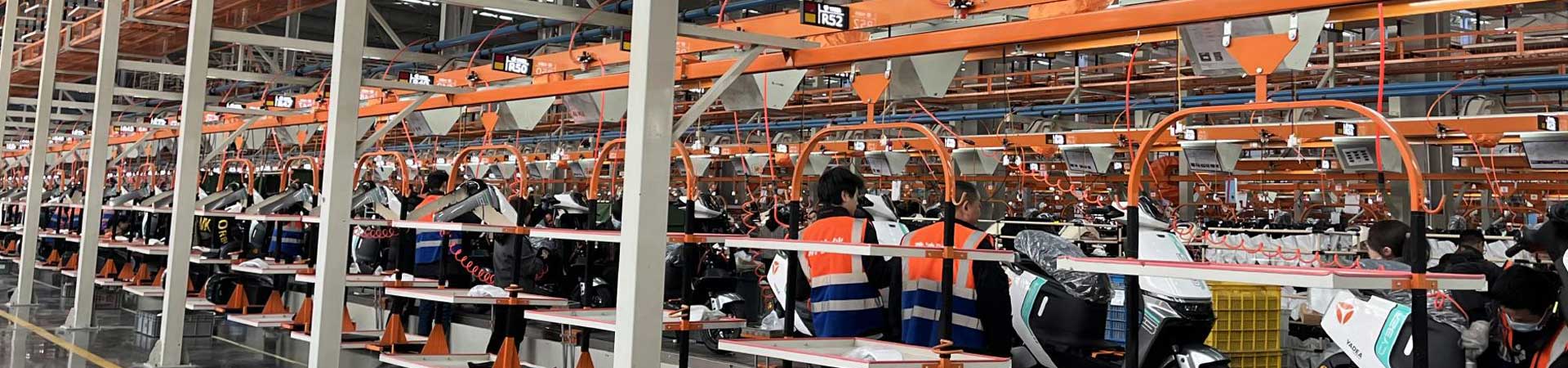
Product Categories
PRODUCT CATEGORYContact Us
CONTACT USMobile phone:+86-15395152932
mail:[email protected]
Address:Electronic Information Industrial Park, Shunyi District, Beijing City

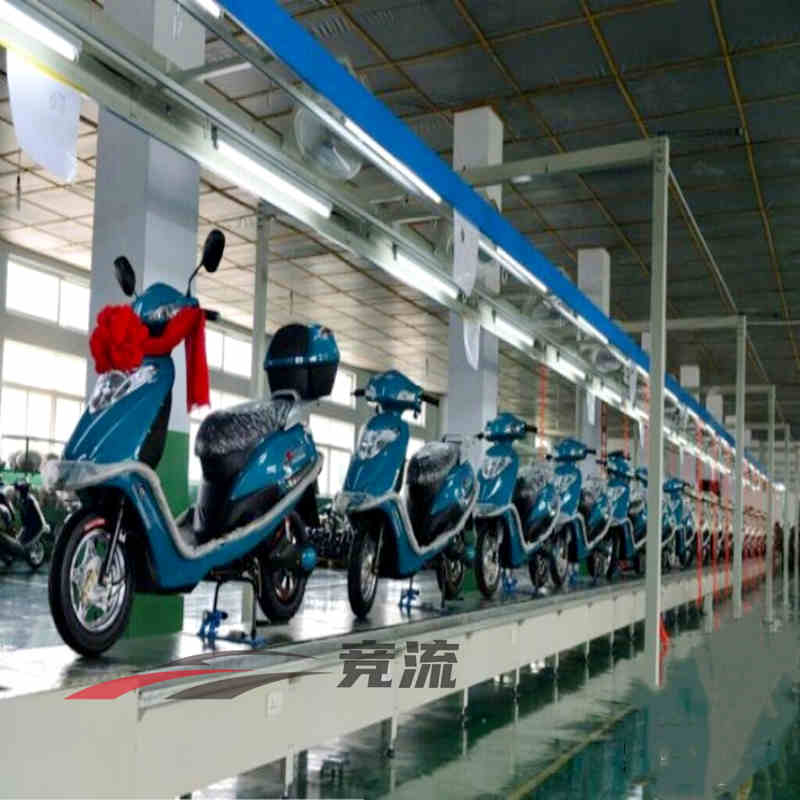
(2) Two-wheeler assembly line
Our two-wheeler assembly line is a complete turnkey manufacturing system designed to assemble scatte...
Details
Our two-wheeler assembly line is a complete turnkey manufacturing system designed to assemble scattered components into finished two-wheel vehicles, including electric bicycles, electric scooters, fuel motorcycles and traditional bicycles.
This automated assembly solution covers full-process vehicle assembly, from raw part feeding, frame assembly, powertrain installation to final off-line inspection. It is widely adopted in two-wheeler manufacturing factories to streamline workflows, cut manual errors and boost mass production capacity.
Core Advantages of Our Two-wheeler Assembly Line
1. High Production Flexibility for Multi-Vehicle Mix Manufacturing
The assembly system supports mixed production of multiple two-wheeler types, ranging from electric two-wheelers to gasoline motorcycles. Thanks to quick-change tooling design and programmable process settings, model switching can be finished within 10 minutes. Manufacturers can easily adjust production schedules to produce different vehicle models on the same line without heavy reconstruction.
2. Intelligent Error-Prevention System to Reduce Assembly Defects
Built-in multi-dimensional error-proof mechanisms are integrated across assembly stations, including visual inspection cameras, real-time torque monitoring for bolt fastening and circuit continuity testing. These smart checks catch assembly mistakes at each working station. With this system, the overall assembly defect rate can be controlled below 0.3‰, effectively improving finished vehicle quality and reducing after-sale issues.
3. Optimized Production Rhythm for High Volume Output
We optimize the single-piece flow takt time, which can be flexibly adjusted between 30 seconds and 60 seconds per unit. A single complete assembly line can achieve a daily output of 1,500 to 2,000 finished two-wheelers, perfectly satisfying the demand of large-scale mass production and helping factories maximize production efficiency.
4. Fully Customizable Layout & Equipment Configuration
We do not provide standard one-size-fits-all assembly lines. Our engineering team customizes the process route, equipment selection and station layout according to your factory space layout, target production capacity and vehicle structural characteristics. Customized solutions guarantee stable, smooth and efficient assembly operations matching your unique manufacturing requirements.
Main Workflow of Two-wheeler Assembly Line
1. Parts Distribution & Material Feeding
Based on the BOM (Bill of Materials) of each vehicle model, all required raw parts including frames, motors, batteries, tires, wiring harnesses and plastic body parts are sorted in advance. Materials are delivered to corresponding assembly stations via AGV robots, overhead suspension chains or manual material carts, to ensure every workstation gets correct components on time.
2. Frame Assembly
At this station, core frame components (main beams, auxiliary beams, front fork connectors and related metal parts) are joined together through welding and bolt fastening. This step forms the basic vehicle skeleton, which acts as the foundation for all subsequent assembly operations.
3. Powertrain Installation & Pre-testing
For fuel motorcycles, the engine is mounted and fixed onto the frame. Technicians connect all matched pipelines and wiring, such as fuel tubes, exhaust pipes and control cables. After installation, preliminary engine debugging and function tests will be performed. For electric two-wheelers, this station will carry out motor mounting and power line connection.
4. Wheel & Tire Mounting + Dynamic Balance Adjustment
Hubs and tires are assembled and fitted onto the vehicle frame. After installation, wheel dynamic balance calibration is carried out. This process eliminates imbalance problems to guarantee smooth riding performance and driving safety for end users.
5. Brake System Assembly & Bleeding
Brake discs, brake pads, brake calipers and brake oil pipelines are installed sequentially. After assembly, brake system debugging and oil bleeding operations are completed to ensure stable, reliable braking performance.
6. Electrical System Installation & Testing
All electrical components, including batteries, wiring harnesses, lights and dashboard instruments are mounted and wired. The whole electrical circuit is connected and tested to verify lighting, power supply and instrument display functions.
7. Body & Trim Parts Fitting
Cosmetic and structural body accessories are assembled here, including seats, handlebars, rearview mirrors, side covers and mudguards. This step completes the exterior appearance of the whole vehicle.
8. Comprehensive Final Inspection
Every finished two-wheeler goes through full visual check and multi-item functional test. Inspectors verify all assembly items to confirm the vehicle meets factory quality standards before leaving the production line.
Who This Assembly Line Is For
- Electric bicycle / electric scooter manufacturers
- Gasoline motorcycle factories
- Traditional bicycle production plants
- New two-wheeler manufacturing projects looking for turnkey assembly solutions
Optional Add-On Equipment
- Automatic bolt tightening machines
- Online leak test benches
- Vehicle rolling test stands
- Overhead conveyor systems
- MES production data monitoring system
(2) Two-wheeler assembly lineQuote----(2) Two-wheeler assembly lineFor the latest case images, please contact us for more specific information